
The Great Unveiling
Exploring the Gradual Discovery of Purpose, Pt. 1


The Myth of the Extraordinary
We are deep in the midst of football season. Each game has more ads than I can count. Most of them are built on the premise, “You could have so much more! Go for it! After all, you are worth it!” If you settle for last year’s model, stay in the smaller house, take a less complicated vacation, or root yourself in that smaller community, you’re not up with the times. You are settling for far less than you could.
The Promise of More
Reflecting on these ads made me realize how much the same relentless ambition drove me. I have tended to move restlessly from one grand adventure to the next: the next place, job, house, degree, or promotion. I’ve looked for the next extraordinary moment, the next big thing. Undoubtedly, the next big thing will be what we are after. The ordinary won’t do.
Expectations like these were part of my early faith tradition. We struggled with the ordinary because we wanted the spectacular. We needed the next revival, the next camp high, the next big move of God. Don’t get me wrong. All these can be good things but don’t reflect our ordinary experience.
Familiar Places
As each year passes, I grow less enamored with the extraordinary. We do not find the deepest part of who we are in the exceptional moments of our lives; we find our purpose in the ordinary.
Zach Eswine’s recollections shared in his Sensing Jesus struck me. He recounted walking around an aunt’s yard. She knew the species of each tree, flower, and shrub on her property. Zack could go to familiar locations and meet familiar people in the small town where he grew up. The book reflected Eswine choosing to stay in smaller, local settings when he could have opted for bigger ones.
I grew up in the same community throughout my childhood. I attended the same school from kindergarten through high school graduation (near grandparents, aunts, uncles, and cousins). After a failed first attempt at college, I enlisted in the Marine Corps. Apart from my initial stint in college and two years after serving as an enlisted Marine, I have lived away from my hometown.
My brother built a home in the town we grew up in. Not long ago, Vicki and I were back for a visit. I remember walking through the community and reflecting on how familiar it was. Walking near the school I attended, I told my wife about the screen repairman I greeted each morning on my way to school. We walked to the park, where we always ended our Independence Day parade. We drove the streets of my old paper route, and I rode my bike near the fields where I played Little League baseball. I wondered aloud to her what it would be like to move back to a small, ordinary town where many residents have spent their entire lives and where, as the television show Cheers jingle said, “People know your name.”
I’ve lived a great life and experienced many extraordinary things, and I have many more yet to experience. My military career has taken our family to many places, and I now live with my wife in a comfortable home in a beautiful part of the country. I have had many life-altering experiences: Marine Corps boot camp and deploying to Saudi Arabia just after Desert Storm, marriage, becoming a father, the death of my dad, deploying on a Navy ship, visiting foreign countries, and several difficult medical experiences. But these events were not where I found my purpose.
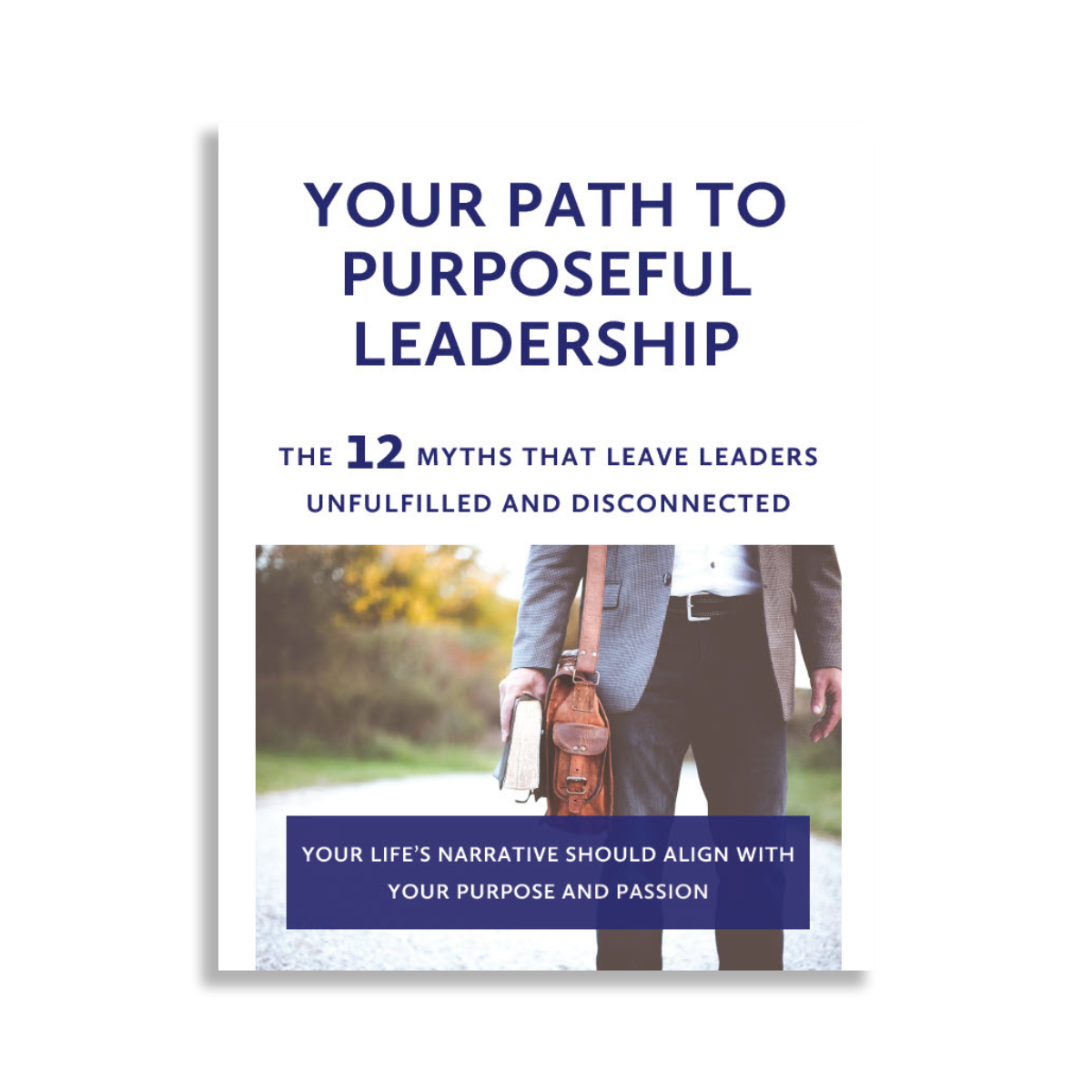
The pursuit of finding our purpose is a slow and gradual process.
I have a free tool to assist you on your journey toward finding purpose.
I’ve lived a full life, yet every day, I think about living with more purpose.
It truly is a journey that never ends.
Join me on this journey.
Trusting the Ordinary
Some of the most moving times of my life have been in what I call “mountaintop experiences,” including retreats and conferences in beautiful locations, profound worship services, and family vacations. Although these experiences were noteworthy, I generally do not trust what I view as “emotional high experiences.” There have been seasons when the moment's emotion pushed me toward a decision, and in hindsight, some of those decisions were wrong.
Regretful Choices
Think about being at a car dealership. The salesperson takes you for a test drive in a new Cadillac Escalade. The vehicle has all the bells and whistles. He tells you about all the features, how the car keeps its value, has a low maintenance cost, and how much better it will be for your bottom line if you trade the paid-off vehicle you drove in for a new Escalade. He tells you your life will be better for making the decision today. And the deal he is offering is a one-time deal. It will be gone tomorrow.
Before you know it, you are signing the bottom line on a purchase agreement and agreeing to monthly payments beyond what you can afford. After all, you think: “I am worth it.” Then, the newness wears off, and you feel the impact of the high car payment. You realize the vehicle is not cheap to service, and you regret your decision. You could have stopped the process at the dealership and committed to taking a few days to consider your options and think through your budget instead of allowing the emotions of the moment to push you into a decision you should not have made.
Lessons from a Sergeant Major
I've often made decisions too quickly, without taking a moment to consider the future effects of my choices. During the second half of my career, I spent a lot of time with young people. When I was younger, I tended to live in the moment and didn't think much about the long-term consequences of my decisions; I only focused on what I wanted and felt I needed at that time.
My first Navy Chaplain assignment was at a Marine Corps Harrier jet base in Yuma, AZ. As a new chaplain officer, I struck up a friendship with my unit Sergeant Major. During one of many conversations where I sought his advice and guidance, he told me that one of his standard lines with Marines was to ask them to think about their decisions' secondary and tertiary effects. He wanted the Marines in his charge to think not only about how their choices would affect them in the present moment but also about the future impact of their decisions and how they would affect those around them.
Bill encouraged young men and women to think before rushing into a decision. For example:
I want to drink with my friends tonight. Do I have a plan for getting back home safely? What will happen if I don’t plan well and if I don’t look out for my friends?
I am considering marrying this person since we already have a child. Outside of our physical relationship, are we a good match spiritually, temperamentally, and in our desires for the future? Do I want to have more children with this person?
I am considering purchasing a high-end car on a junior enlisted salary (trust me, they don’t make much money). They are offering me 100% financing and a 15% interest rate. How much will the car payments be? And how much will I need for maintenance? Can I afford the car over the long term?
Forged in the Crucible
We find our purpose in the ordinary. We live in an attention culture. One media maxim is, “If it bleeds, it leads.” The extraordinary is what gets posted on social media. Getting married, the birth of a child, milestone events of our children and grandchildren, graduating from high school or college, highlights from a long-planned vacation) will likely be featured on social media.
The Attention Culture
You and I usually won’t post life's ordinary or challenging events. When we were raising children, I did not post about parenting difficulties. I did not post about the four seizures I have had in the last two years. I posted about my promotions, military retirement, and the many times I wanted to celebrate my wife and children.
There are obvious reasons we don’t post about the hard times: We don’t want to embarrass people, we don’t like to talk about our areas of weakness, and we don’t want to be “downer” individuals. We want people to know we have a good life. We major in the positives vs. focusing on the negatives of our lives.
Lessons from the Refining Process
Just as learning happened for many of us as we made mistakes, the same can be true of gaining clarity and growth for our purpose in the hard seasons of life. I have grown more and gained clarity in my purpose in the hard seasons of my life. I call these crucible experiences. A crucible is a container that contains the intense heat and pressure necessary for raw material to transform into something else.
Gold must be heated to 1,948 degrees to melt and separate the impure elements. A smelter scrapes away the impurities after they rise to the top. Only then is gold purified. Heating to this incredible temperature happens in a crucible. The pot must withstand the heat. If it does not, the hot gold flows out of the pot and is not purified. God’s purpose for us is to be like the purified gold. Peter writes this in his first letter:
“These trials will show that your faith is genuine. It is being tested as fire tests and purifies gold – though your faith is far more precious than mere gold. So when your faith remains strong through many trials, it will bring you much praise and glory and honor on the day when Jesus Christ is revealed to the whole world” (1 Peter 1: 7 (NLT).
Invitation to the Trust Journey
Friends, pursuing purpose is not a sprint but a marathon. It's about trusting the gradual unveiling of your unique calling and purpose rather than grasping for the extraordinary.
Resist the allure of the "big, bold" moments. Instead, find strength in the crucible experiences that refine your character. Embrace the ordinary, the mundane, the seemingly insignificant - for it is there that the seeds of your purpose take root and grow.
Next week, we will consider how the long obedience of the spiritual journey speaks to the human pursuit of purpose. We’ll think more about how the crucible experiences introduced here help us gradually discern the best direction for our lives.
The journey of finding and refining our purpose is one that never ends.
Join me on this journey.